
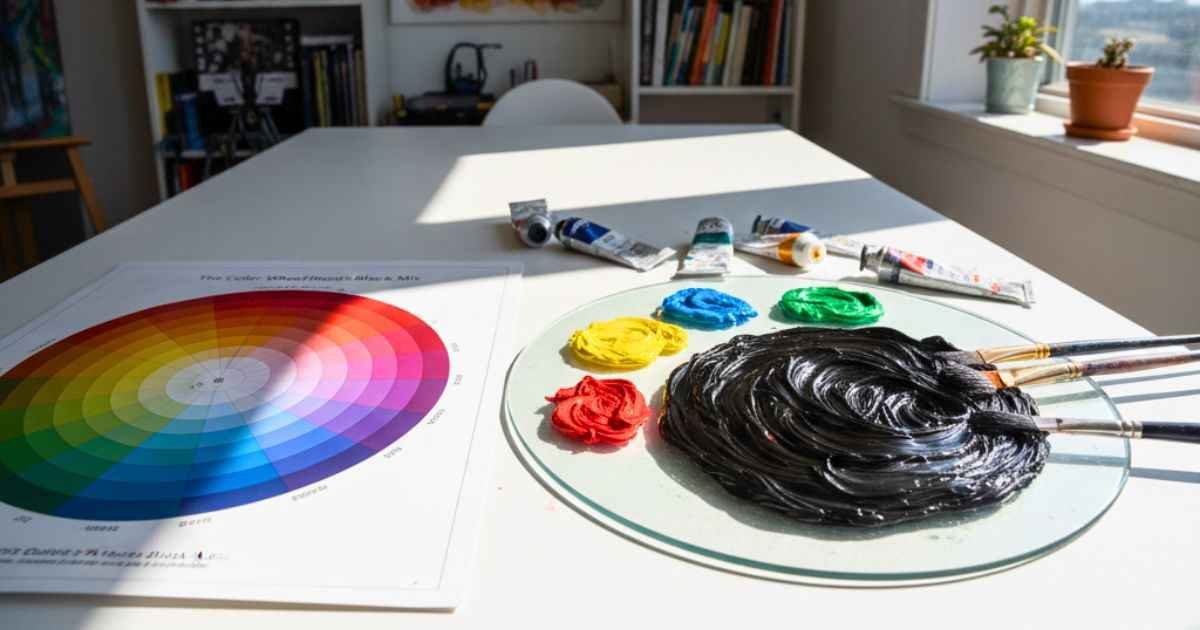
Many people wonder what colors make black. It sounds simple, but it can be tricky to do. Some people try to make black paint, black icing, or black nail polish at home. They watch videos or read guides, but the color often turns brown or gray.
This happens because not every guide online is true. Some use wrong or unsafe colors that can hurt skin or food. When people mix the wrong shades, the color turns muddy or dull. That is why it is important to learn the safe and right way to make black.
Black is used everywhere. Artists mix it for shadows and dark spots. Bakers use it for cakes and frosting. Designers use it in clothes and art because it matches all colors.
This article shares easy and safe ways to make black. It shows how to mix black from paint or natural colors. It also explains how light and color work together to make deep and rich black shades.
Understanding the Color Wheel
Before learning how to mix black, you need to know about the color wheel. The color wheel helps people see how colors are linked. It looks like a circle and shows how colors can mix and match.
There are three main kinds of colors.
Primary colors are red, blue, and yellow. You cannot make them by mixing other colors.
Secondary colors come from mixing two primary colors. For example:
- Red and blue make purple
- Blue and yellow make green
- Red and yellow make orange
The next part is complementary colors. These are colors that sit across from each other on the color wheel. When you mix them, they balance each other and can make dark or dull tones.
Here is a simple table that shows opposite color pairs:
| Color | Opposite Color |
|---|---|
| Red | Green |
| Blue | Orange |
| Purple | Yellow |
When you mix these pairs in the right way, they can make black or gray. Artists use this trick when they do not want to use ready-made black paint.
Learning color wheel opposite combinations helps painters, bakers, and makeup artists. It helps them make the right dark tone. Knowing this is the first step before learning what colors make black in paint, food, or other things.
The Science Behind Making Black
To understand what colors make black, it helps to know how color works. Science says black is made when all light is taken in and none is reflected. That is why black looks so dark to our eyes.
There are two main ways to make colors — by light or by pigment.
- Light mixing happens in screens or phones. When all light colors mix, they make white.
- Pigment mixing happens in paint, ink, or clay. When all colors mix, they stop light and make black or brown.
This is called color theory for making black. When you mix colors that sit opposite each other, they block light. Red and green, or blue and orange, can make deep dark shades. These colors cancel each other out and make black or gray.
Knowing this helps artists avoid dull mixes. They can pick colors that take in more light. The more light that is taken in, the darker the black looks.
This is the secret to making rich black without wasting paint or getting weak colors. It helps anyone who wants strong, even black shades.
Mixing Primary Colors to Make Black
Many people do not know they can make black using only three colors. To learn what colors make black, start with red, blue, and yellow. These are the main or primary colors.
When you mix all three in equal parts, you get dark brown or gray. You can then change it a little to make it darker. The trick is balance. Too much yellow makes it warm. Too much blue makes it cool.
Here is an easy way to test it:
- Mix red and blue first to get purple.
- Add yellow slowly.
- If it looks dull, add a bit more blue.
- Keep mixing until it looks deep and dark.
This shows how to make pure black paint using simple colors. It works with acrylic, oil, or watercolor paints. Artists use this when they want soft, real shadows instead of flat store-bought black.
Mixing primary colors helps you see what colors create dark tones and which mix makes dark black. Small color changes can make a big difference.
Keep trying until you find your perfect mix. Once you do, you can use it for any art or craft project you like.
Complementary Colors that Create Black
Another easy way to make black is by mixing complementary colors. These are colors that sit across from each other on the color wheel. When you mix them, they balance and take away brightness. Artists use this to make black or gray without using ready-made paint.
Here are some color pairs that work well:
| Color Mix | Result |
|---|---|
| Red + Green | Warm black or brown-black |
| Blue + Orange | Cool black with gray look |
| Purple + Yellow | Soft, even black |
Each mix feels a bit different. Red and green make a warm black, good for skin tones or nature art. Blue and orange make a cool black, nice for metal or sky colors. Purple and yellow make a soft, even black, good for most art.
Mixing complementary colors for black helps you control the look and feel. It shows how color wheel opposite combinations work in real life.
If you want a soft shadow, try warm black. If you want a cool one, use cool black. Test small samples first because paint often looks darker when dry.
Learning these complementary color combinations helps you make black for paint, icing, and clay. It is safe, easy, and fun. You can make colors that look clean, rich, and natural.
Using Blue and Brown to Make Black
To try this, take the same amount of blue and brown paint. Mix them slowly. Watch as the color turns dark. If it looks too red, add more blue. If it looks too gray, add more brown.
This mix works great for shadows, tree bark, or night skies. It makes a rich, soft black that feels natural. You can use it in watercolor, acrylic, or oil paint.
This is a simple way to learn how to make black with brown. It helps beginners who do not have many colors. The black you make will look softer than store paint and blends better in your art.
Try using different blues like navy or ultramarine. Use dark browns like burnt umber. Each mix gives a new shade. It is fun to test and play with colors.
How to Make Black in Different Paint Types
Artists use many paints, and each type mixes colors in a different way. The paint base — water, oil, or acrylic — changes how the black looks.
What 2 Colours Make Black in Acrylic Paint
In acrylic paint, mix blue and brown or red and green. These colors mix fast and dry nicely. Acrylic paint dries quickly, so mix only a little at a time. Add one drop of water to help blend. It may look lighter when wet but gets darker when dry.
How to Make Black in Watercolor
For watercolor, use more water and less paint. Mix blue, red, and yellow until you get a soft black. You can also try blue and orange. If it looks gray, add a bit more blue. Watercolor black is see-through and good for sky or shadow layers.
How to Make Black in Oil Paint
Oil paint dries slowly, so you have more time to fix the mix. Mix blue and brown or purple and yellow. Oil paints make deep blacks that stay rich and do not fade. Add one drop of linseed oil to make it smooth.
Each paint type makes a different kind of black. Acrylic gives quick results. Watercolor gives soft tones. Oil gives deep, long-lasting color.
Everyday DIY Uses of Black Color Mixing
You can make black paint at home easily. It is fun for crafts, art, or school projects. Many people learn what colors make black paint for their DIY work.
To make black paint, mix red, blue, and yellow in the same amount. If it looks brown, add more blue. You can use this paint on paper, canvas, or wood. You can also use food colors or natural colors for crafts.
To make black clay, mix dark blue and brown clay. Press and roll it until the color is even. Add a little purple clay if you want it darker.
To make black icing, mix blue, green, and red food coloring into white frosting. Add each color slowly. It may look gray at first, but it will turn darker after a few minutes.
These small projects show how easy it is to make black at home. It helps you save money and learn about colors. You can make your own black for painting, baking, or playing with kids.
Food and Cosmetic Applications
Black is used in food and makeup. But not all colors are safe for skin or eating. So it is good to know what colors make black food coloring or nail polish safely.
To make black food coloring, mix red, blue, and green food colors. Add a few drops at a time until the color looks dark. For black frosting, mix red, blue, and brown food colors with white icing. It will turn darker as it sits.
In makeup or nail polish, black is made from safe powders like iron oxide or carbon. They make strong color that stays long. To make black nail polish at home, mix dark blue and red with a little green polish. It gives a deep, shiny black.
Always use colors made for food or makeup. Never use normal paint or dye — they can cause skin problems. Always read labels before using.
Artistic Applications and Temperature Control
Artists know that black can look warm or cool. Warm black has red, brown, or orange in it. Cool black has blue, green, or purple. Learning how to mix colors helps make your art look better.
Warm black is great for sunset shadows. Cool black is good for night scenes or shiny things like metal. Mixing warm and cool colors makes the painting look real.
Artists often test colors before painting. It helps them pick the right mix. A paint mixing guide for artists is a great tool to practice.
Here are quick tips:
- Add blue for cool black.
- Add red or brown for warm black.
- Add white to make soft gray.
This helps you control light, tone, and feeling in your art.
Natural and Eco-Friendly Alternatives
You can make black in natural ways too. It is easy to learn how to make black pigment naturally.
You can crush charcoal into fine powder. Mix it with water or oil to make paint or ink. You can also use coffee or burnt wood. They make soft, brown-black colors that look calm.
You can even use dark soil. Mix it with glue or egg yolk to make natural paint. It works for crafts and nature art.
If your paint looks too light, here is how to darken paint naturally: add more charcoal or coffee mix. Keep testing until you get the right shade.
Natural colors are safe, easy to clean, and kind to Earth. They are great for kids, schools, or eco-art lovers.
Problems, Myths, and Common Mistakes
Many people find it hard to make real black. They read wrong tips online or follow fake paint videos. Some use unsafe dyes or bad recipes that can ruin colors or harm the skin.
One big myth is that you can make black by mixing any dark colors. That is not true. If you mix random shades, you often get muddy brown or gray instead of black. Another mistake is adding too much water or white paint, which makes the color pale.
Some people even use ink or shoe polish to make black paint. That is unsafe and can damage paper or skin. Always use real art or food pigments made for that use.
To avoid bad mixes, learn how to create neutral tones in art. Neutral tones come from mixing colors that balance each other, like blue and brown or red and green. When they cancel each other’s brightness, they make dark shades.
To make darker hues in paint, add a little blue or brown instead of black paint. This makes your color rich and natural.
If you find online tricks that say “add vinegar” or “use marker ink,” skip them. They are fake tutorials. Real color mixing takes time and practice. You will get better results with safe, real colors.
Pros and Cons of Mixing Your Own Black
Making your own black paint is fun and creative. But like everything, it has good and bad sides.
Pros of Mixing Your Own Black
- You can make custom tones for your art.
- It saves money because you use colors you already have.
- You can control if your black looks warm or cool.
Cons of Mixing Your Own Black
- It may not be as dark as store-bought paint.
- You may not get the same color every time.
- Some mixes dry lighter or uneven.
Here is a simple table to show the difference:
| Type | Benefits | Drawbacks |
|---|---|---|
| Mixed Black | Custom tones, cost-saving, more control | May not be deep or stable |
| Store-Bought Black | Ready to use, strong and even color | Less flexible, costly |
Mixing your own black helps you learn how colors work together. It is great for beginners who want to experiment and grow their skills.
How to Adjust Tone, Hue, and Value
After you mix black, you can change how it looks. Artists call this adjusting the tone, hue, and value.
Tone means how light or dark a color is. Hue means the color itself, like red, blue, or green. Value means how bright or deep it feels.
To mix dark colors for shading, start with your black mix. Add more brown for warmth or blue for coolness. This gives your shadows a real and soft look.
If your black looks dull, here are easy tips:
- Add a little blue to make it cooler.
- Add red or brown to make it warmer.
- Add white to turn it into gray.
If you want a deep black shade, use dark transparent colors like ultramarine blue or burnt umber. They make your paint darker without looking flat.
Try painting small samples before using it in your work. That helps you see how it dries. Sometimes paint looks lighter when wet and darker when dry.
These small changes make a big difference. Learning what makes a deep black shade helps you mix the best black for your art or craft.
You May Also Like: What Time Was It 8 Hours Ago? Essential Quick Guide
FAQs: Quick Answers for Common Questions
What colors make black and white?
Black comes from mixing all primary colors — red, blue, and yellow — or by mixing opposite colors like blue and orange.
White cannot be made by mixing colors. It is the base that holds all light.
What colors make white?
You cannot mix paint to make white. White is a pure color that reflects all light. In light form, red, green, and blue light make white.
What colors make black tattoo link?
Tattoo ink black is made with safe pigments like carbon black or iron oxide. Artists never use mixed paint for tattoos. Always use professional ink.
What colors make black cherry?
Black cherry is a deep red made by mixing dark red with a touch of blue or brown. It gives a rich, fruity shade used in art and design.
Final Thoughts: Safe and Smart Color Mixing
Learning what colors make black helps you mix paint like a pro. It shows how colors work together to make deep, rich shades.
Always use safe colors. Avoid fake tips that use unsafe or non-art materials. Read labels and test small amounts first.
Black is more than just one color. You can make it warm or cool, soft or deep, all by adjusting your mix. Be patient and try new ideas.
Remember, transparency matters. Use clear, trusted pigments that blend well. This gives your art life and shine.
Mixing your own black is fun, safe, and creative. With practice, you will learn how to make every shade you want — from dark gray to pure black.
That is the smart way to understand what colors make black safely and beautifully.
Disclaimer
This article is meant for educational and informational purposes only. Always use non-toxic, skin-safe, or food-grade pigments when mixing colors. Do not use industrial or unsafe materials for art, food, or cosmetic applications. Follow all safety labels and manufacturer guidelines before use.