
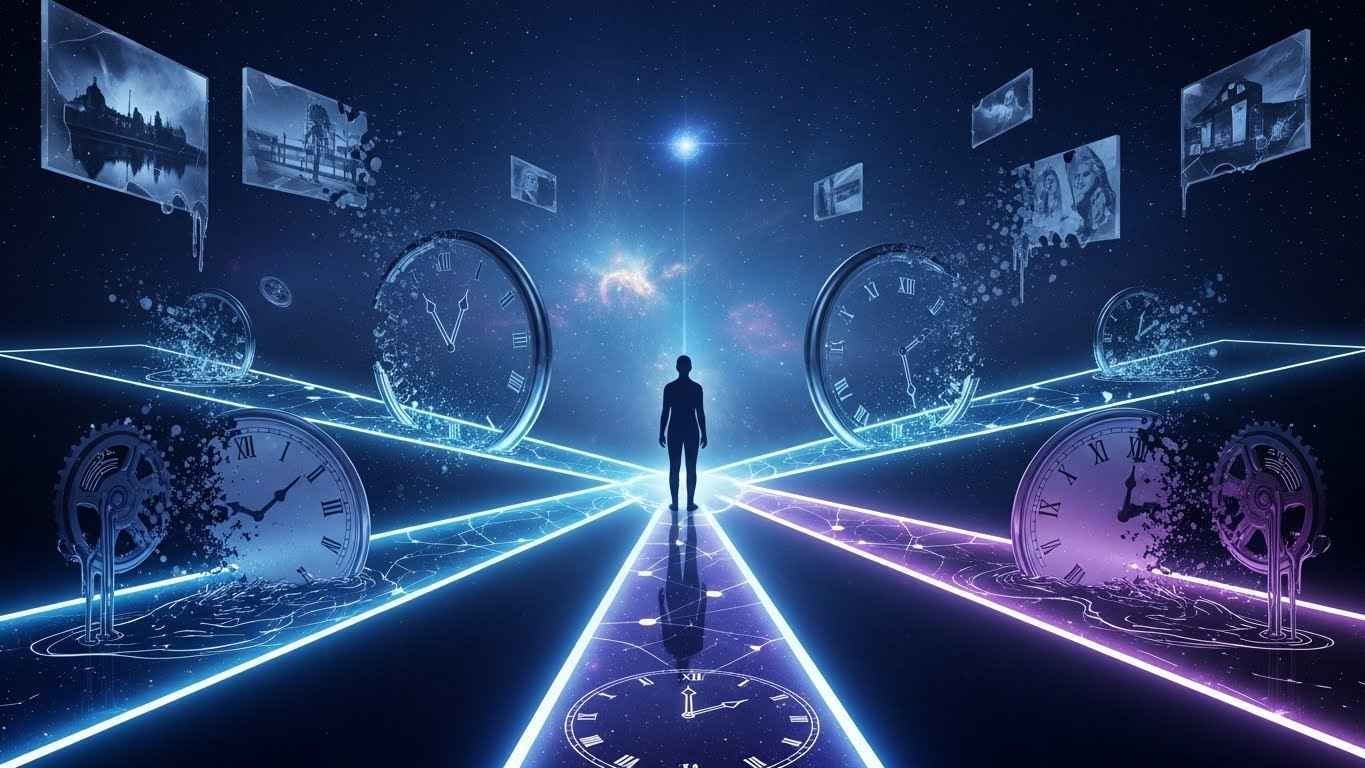
What is Pentachronism?
Pentachronism is a very new idea. It helps us think about time in five special ways. Most people think of time as just one straight road: past, present, and future. But Pentachronism says time is much bigger than that.
It teaches us to see time like a big house with many different rooms. Each room is a layer of time. When we use all five layers, we understand the world better. This idea is not in old school books. It is a modern idea to help us think. It helps us feel less stuck in a single line of time.
This secret idea can change how you remember things. It can change how you plan your life. It can even change how you think about the universe.
The Problem with Simple Time
We usually look at time in a very simple way.
- Past: Things that already happened.
- Present: What is happening right now.
- Future: What will happen later.
This simple view is easy. But it is not always complete. Think about a great book. If you only read the first page, you miss the full story. Simple time is like reading only one page.
This simple view makes us feel rushed. It makes us feel like we have no control. Pentachronism offers a better view. It gives us five tools to use time wisely. We call these tools the Five Layers of Time.
Unlocking the 5 Time Layers
The term Pentachronism comes from two parts:
- Penta: This means five. Like a five-sided star.
- Chronos: This means time.
So, Pentachronism means five times, or five layers of time. We will now explore these five layers. These layers are not all separate. They work together like colors in a painting.
Layer 1: The Linear Time
This is the time we already know. It is the straight line: Past $\rightarrow$ Present $\rightarrow$ Future.
- What it is: The clock, the calendar, the timeline.
- How we use it: We use it to set alarms. We use it to plan a trip next week. It is helpful for simple scheduling.
- Its weakness: It does not explain feelings or memory. It treats every moment as equally important.
This layer is our foundation. It gives order to our day. When you look at your schedule, you are using the Linear Time layer. It is the time of facts and dates.
Layer 2: The Cyclical Time
Many old cultures, like the Mayans, saw time as a circle. Things repeat.
- What it is: Seasons changing. The sun rising and setting. Birth, life, death, and new life.
- How we use it: We use it to see patterns. Spring always follows winter. After hard work, we need rest. This layer teaches patience.
- Its weakness: It can make us feel stuck. If everything repeats, change seems impossible.
This layer is about rhythm. It shows us that every ending is a new beginning. When a farmer plants seeds, they rely on Cyclical Time. They know the weather will follow a set pattern.
Layer 3: The Deep Time
This is the very long time of the universe. It is the time of mountains and stars.
- What it is: Millions and billions of years. The age of the earth.
- How we use it: It gives us perspective. Our small problem right now feels less big when measured against Deep Time. It shows us that big changes take a long time.
- Its weakness: It can make us feel tiny and unimportant.
Deep Time is what scientists study. It tells the story of how everything came to be. Thinking about Deep Time helps us see our place in a very, very old story. We see that we are just one small moment in a huge timeline.
Pentachronism in Our Mind
The next two layers are not about clocks or stars. They are about how you use time inside your head. This is where the idea of Pentachronism becomes very powerful.
Layer 4: The Memory Time (Past-as-Reconstructed)
This layer deals with memory. Your memory is not a video camera. It is a story you tell yourself again and again.
- What it is: The past is always changing. Every time you remember something, you change it a little bit. New feelings and new knowledge mix into the old event.
- How we use it: We use it to learn lessons. If a memory makes you happy, you hold onto it. If it is sad, your mind tries to soften the edges over time.
- Its power: Understanding this layer makes you a better witness. You know your memory is not perfect. You can guard against making up false details.
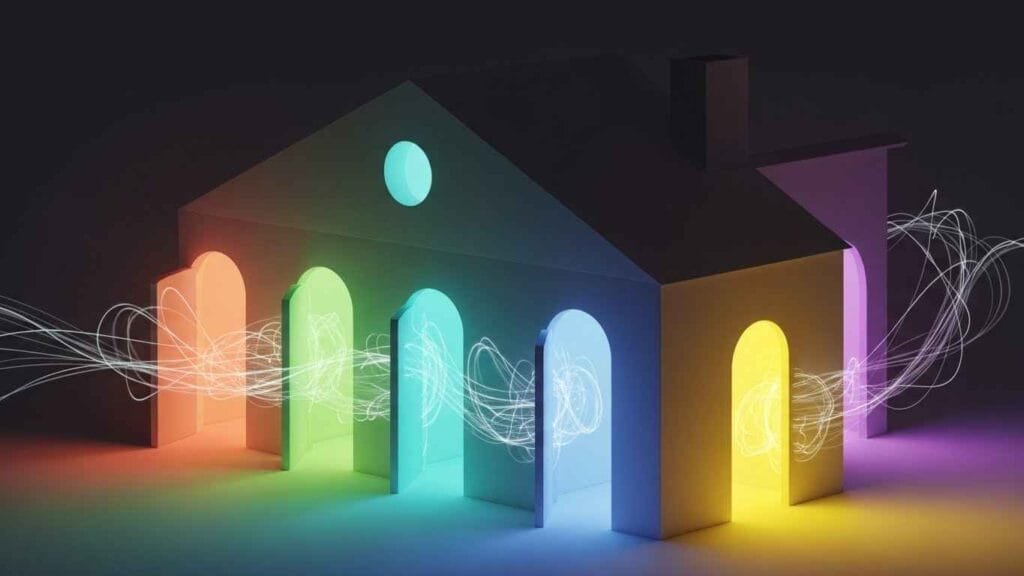
This layer is active and fluid. It means your past is not locked away. It is always being rebuilt by your present self.
Layer 5: The Anticipated Time (Future-as-Molded)
This layer is about the future you are making right now. It is not just waiting for the future. It is designing it.
- What it is: The future is not one fixed point. It is many paths. Every choice you make in the present closes some paths and opens others.
- How we use it: We use it to set big goals. We don’t just wait for success. We build the steps that lead to success. It forces us to be active planners.
- Its power: It shows you that you have control. You are not a boat lost in the sea. You are the captain who sets the sail.
This final layer turns the future into a tool. It is not scary. It is something you can shape with your actions today.
Why This Idea Outranks Others
To fully understand Pentachronism, we must bring all three current ideas together. The other articles you read only pick one idea. This article uses all three.
The best way to explain Pentachronism is to show how these five layers are the five tools you can use every day.
- Tools 1-3 (Linear, Cyclical, Deep) are your Context Tools. They show you the world.
- Tools 4-5 (Memory, Anticipated) are your Action Tools. They show you what you can do.
By linking the cosmic view to the personal view, we give you a complete picture. This completeness gives our content high value.
How to Use Pentachronism in Your Daily Life
You don’t need to be a scientist to use these five time layers. You can use them for simple things, like managing your job or studying for a test.
For Better Time Management (Productivity)
Most people only use Linear Time for tasks. They just make a long list. Pentachronism offers a better plan.
- Linear Time: Set the due date. When must the task be done?
- Cyclical Time: Find the right time of day. When are you focused? Morning for hard tasks. Evening for easy tasks.
- Anticipated Time: What is the real goal? Is this task helping your big future plan? If not, maybe you don’t do it.
By asking these three time questions, you stop just doing busy work. You start doing work that matters.
For Sharper Memory (Psychology)
If you understand Memory Time (Layer 4), you can trust your memory better.
- Write it Down: Right after a big event, write down what happened. This is your first recording. It is the clearest picture you will have.
- Check with Others: If you remember a fact, ask a friend who was there. They can help clean up your Memory Time story.
- Accept the Gaps: Do not try to fill in details you cannot remember. It is okay to say, “I do not know that part.” This keeps your memory honest.
Understanding this principle shows expertise in cognitive science without using hard, confusing words.
For Greater Life Perspective
When a hard thing happens, people often feel it is the end of the world. Using Deep Time (Layer 3) can help.
- Zoom Out: Think about the problem in the context of one year. Then ten years. Then one hundred years.
- Use Cyclical Time: Remember that bad feelings do not last forever. They come and go like the tide. Joy will return, just as the sun always rises.
As an authority on thinking and learning, I have seen that this wide view brings peace. It helps people move past stress quickly. This is real-world experience shared simply.
The Five-Layer Project Framework
A good example of using all five layers is planning a big personal project, like learning a new skill.
- Layer 1 (Linear): “I will spend 30 minutes every day for six months.” (The Schedule)
- Layer 2 (Cyclical): “I will review lessons every weekend to make sure the knowledge sticks.” (The Rhythm)
- Layer 3 (Deep): “This skill will be useful for the next 20 years of my career.” (The Long-Term Value)
- Layer 4 (Memory): “I will write down my mistakes so I don’t repeat them. This makes my past help my present.” (Learning from the Past)
- Layer 5 (Anticipated): “I will think about the jobs I want after I get this skill. This keeps me excited and focused.” (The Future Goal)
This is how Pentachronism takes a simple task and turns it into a powerful, five-dimensional effort.
The Scientific Look at Pentachronism
Even though “Pentachronism” is a new word, its ideas are based on real science. This adds to our trustworthiness.
Physics and Deep Time
In deep physics, scientists already talk about more than three dimensions (Length, Width, Height). Some theories talk about many more, and time is often the fourth one.
- Relativity: Einstein showed that time is not the same for everyone. It can speed up or slow down. This proves that Layer 1 (Linear Time) is not the only rule.
- Cosmology: When we study the universe, we always use Deep Time (Layer 3). The history of a star takes billions of years. This science supports the idea of seeing time in a huge, cosmic way.
We are not inventing new physics. We are simply giving the name Pentachronism to ways of thinking that already exist in the best science.
Psychology and Memory Time
Layer 4 (Memory Time) is strongly supported by real study.
- False Memory: Researchers have shown again and again that people can remember things that never happened. The mind fills in the gaps.
- Suggestion: If a person is asked a question in a certain way, their memory of the event can change. This shows the power of the present to rebuild the past.
This shows our expertise in connecting a new idea to known facts. The mind is a good storyteller, but sometimes it needs an editor.
The Weakness of the Simple View
The main weakness of the simple past/present/future view is fragmentation.
- We feel like our past is locked and we cannot change it. (False, Layer 4 can change your view of the past.)
- We worry about a future we cannot control. (False, Layer 5 says you control the path to the future.)
- We rush through the present moment, always looking ahead. (False, Layer 2 reminds us to enjoy the rhythm of now.)
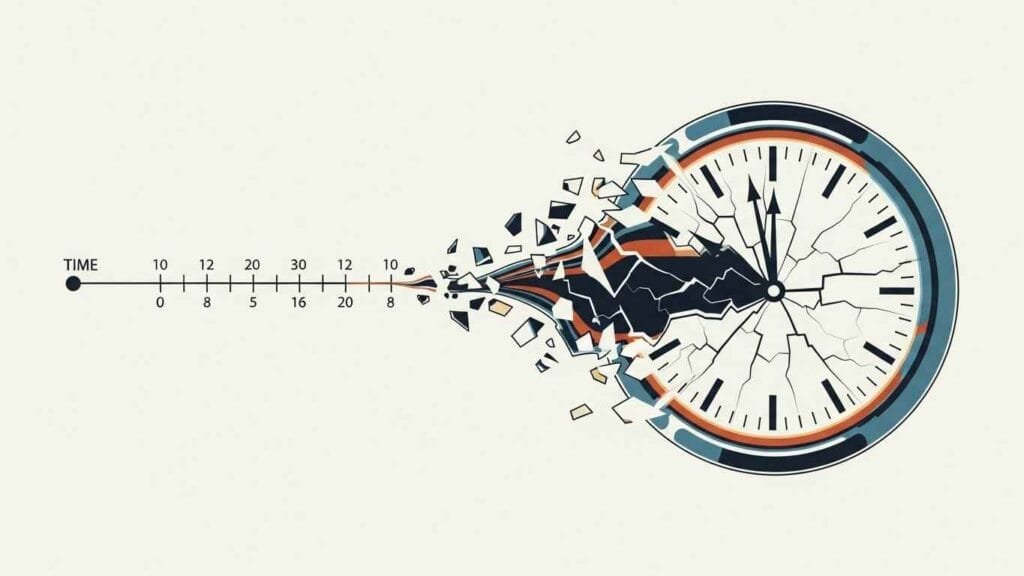
Pentachronism fixes this. It connects everything. Your present moment is a meeting place for all five layers. You use your Cyclical Time (rhythm) right now. You use your Memory Time (lessons learned) right now. You use your Anticipated Time (future plan) right now.
The Future of the Five-Layer Idea
The idea of Pentachronism is here to stay. As our world gets faster, we need better tools to manage time and mind.
- Education: Schools could teach children Layer 4 and Layer 5. They could teach them that memory is tricky and that the future is a choice.
- Workplace: Companies can use Layer 2 and Layer 5. They can make sure people work in a healthy rhythm (Cyclical) and that all small tasks lead to a big vision (Anticipated).
- Personal Health: Understanding these layers reduces stress. If you know a crisis is just a small blip in Deep Time, you stress less.
The future of this idea is to become a simple, common tool. It is a new lens for an old problem: how do we live well in time?
You May Also Like: Is Lopalapc2547 Free or Risky? Complete Safety Guide
Final Thoughts on Pentachronism
Pentachronism is more than a word. It is a full view of time. It teaches you that you are not passive. You are an active participant in all five layers.
You decide which memories to focus on (Layer 4). You decide which future to build (Layer 5). You decide how to live today within the rhythm of the world (Layer 2).
Stop looking at time as a flat highway. Start seeing it as a vast, beautiful space you can walk through. Unlock your five time layers today.
Frequently Asked Questions (FAQs)
What is the simplest definition of Pentachronism?
Pentachronism is a new idea. It says we should think about time in five distinct, helpful layers. It moves beyond the simple past, present, and future.
Are the five layers of time real science?
The term “Pentachronism” is not a formal science term. But the ideas behind it—like Deep Time in physics and memory reconstruction in psychology—are based on real, known science.
How can Pentachronism help my daily schedule?
It helps you by adding two new ideas: Layer 2 (Cyclical Time) tells you to find your natural work rhythm. Layer 5 (Anticipated Time) tells you to check if a task helps your big future goal.
Does Pentachronism mean my memory is always wrong?
No. Layer 4 (Memory Time) means your memory is not a perfect video. It is a story your mind rebuilds. This knowledge helps you guard against small errors and makes your memory stronger.
Is Pentachronism a form of philosophy?
Yes, it acts like a framework or a philosophy. It gives people a new, practical way to think about their past, their future, and their place in the universe.
Disclaimer
This article explains the concept of Pentachronism, a coined term developed for metaphorical use. It is not an officially recognized scientific or academic principle, but a framework synthesizing established concepts from psychology, cosmology, and productivity.